


This item cannot be returned.
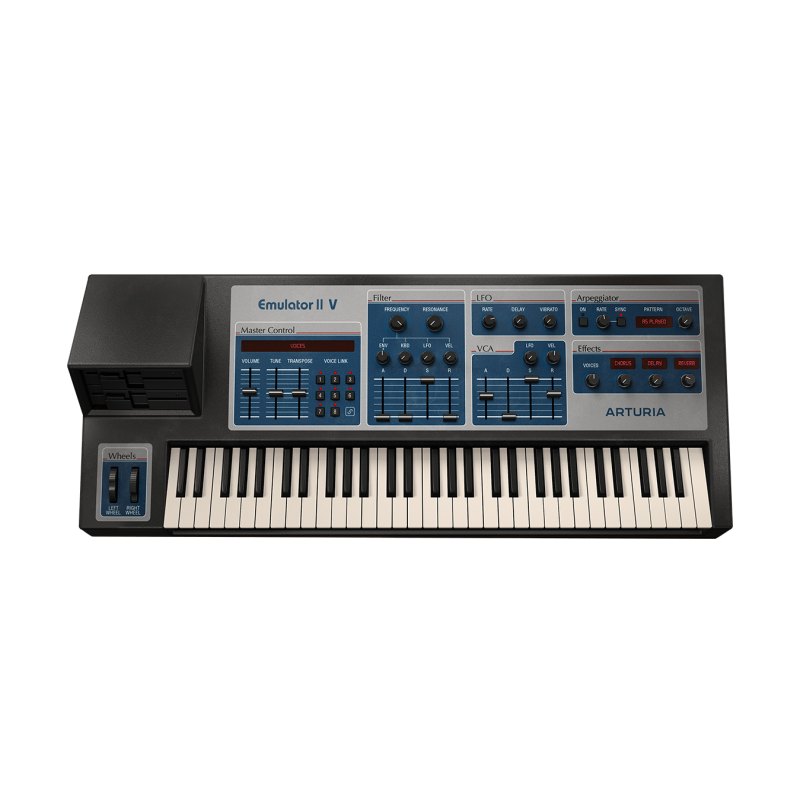
Arturia Emulator II V License (Download)
ID: 7061
• MPN: 210833_Down
• SKU: 1090-87

Authorized Dealer
On Sale






Arturia Emulator II V License Overview
Textural sampling ensemble
Emulator II V is the perfect dusty lo-fi sampling toolkit, combining the old-school digital grit that you love with the cutting-edge creative flexibility that you need.
Emulator II V is a multitimbral sampling machine that brings E-Mu Systems’ seminal digital workhorse back to life in all its nostalgic glory – with a slick modern edge.
Its unique combination of high-fidelity 8-bit sound, warm analog filter, and instantly-recognizable sample library is sure to spark instant creativity, just as the original once did. When you want lo-fi grain, ‘80s sheen, or a sampling flow that stands out from the crowd, look no further.
Digital goes lo-fi
Part sampler, part synth, Emulator II V combines 8-bit digital crunchiness with warm analog filters for a distinctly lo-fi sound that’ll add instant character to any mix.
The sound of the ‘80s
If you’ve heard Depeche Mode, New Order, Genesis, John Carpenter, or pretty much anyone from the ‘80s & ‘90s, you’ve heard the Emulator sound – now it’s in your hands.
No ordinary emulation
The sounds you know
Some of popular music’s most iconic sounds came from the original Emulator libraries; Emulator II V combines them with a fresh & dynamic selection of samples for your mixes.
An instrument that graced every ‘80s line-up. An icon from the early days of sampling. A unique character that helped define the sound of a decade and beyond. The Emulator II’s digital charm and tactile layout made it the musical weapon of choice for everyone from Depeche Mode to Trent Reznor.
The Emulator series was the work of E-mu Systems in the 1980s. Upon release, the Emulator II was met with critical acclaim, combining the novel versatility of sampling with the familiar layout of a classic synthesizer.
At the helm of E-mu systems was the legendary Dave Rossum. A California native, Rossum is now a veteran of the industry, and considered among the most influential figures in electronic instrument design.
His pioneering work combining analog richness and digital precision in modular systems made the synth world sit up and listen, and the company went on to collaborate with the likes of Sequential and Oberheim. It was when the ‘80s hit, however, that Rossum struck gold.
The instrument’s relative affordability, 27.7 kHz sample rate, and reasonably compact synth-style keyboard layout made it a go-to for some of the biggest names in pop, rock, and everything in between. When you heard glossy pianos, lush string pads, and one-hit FX stabs, there was often an Emulator II involved.
At the time, the sampler concept was an up-and-comer; trendy technology reserved for elite hitmaker producers and A-list artists. Dave and his E-mu partner Scott Wedge saw an opportunity to bring sampling to a wider audience.
By drawing more inspiration from the response of acoustic instruments than his experience with electronic ones, the Emulator series was born, and in 1984, the upgraded Emulator II hit the market – and it made waves. Much like Rossum’s pioneering modular designs, the Emulator II combined digital precision with the organic nature of analog circuitry. The result was a higher-fidelity sound that remained warm and full of character – a true project of passion.
Dave Rossum
on the Emulator II
It’s both. Emulator II V comes loaded with a curated sample library that mixes iconic Emulator & Synclavier samples with a diverse modern selection.
Better still, you can import your own samples to give them that diamond retro treatment, or dive deeper into its sampling architecture with enhanced editing tools.
Timeless Iconic Sounds
4 iconic sounds from the original factory library.
Choral vocal sections, the slam of gated ‘80s drums, symphonic brass, the peaceful flow of a shallow stream – back then, you’d collect your samples on floppy disks. Now, Emulator II V brings a fully immersive vintage sampling experience to your DAW, overflowing with sentimental sonic value.
Vintage DAC
A drum loop played first in Modern mode, then with the “Vintage” DAC.