
This item cannot be returned.
Arturia B-3 V License (Download)
ID: 6991
• MPN: 210520_Down
• SKU: 1090-43

Authorized Dealer


In Stock


$99.00
100 in stock
Key Features
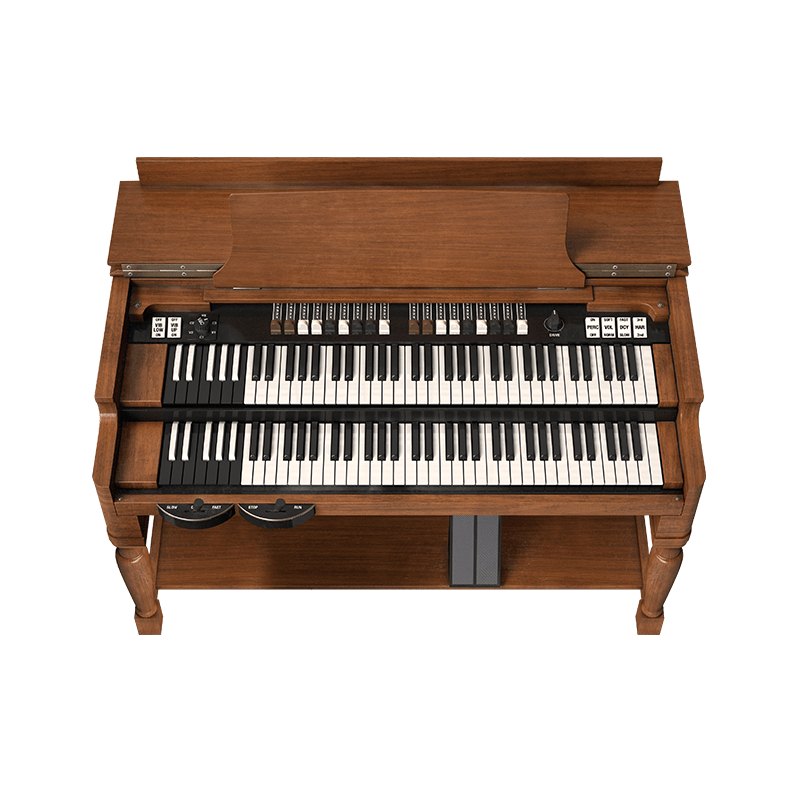
- • Recreation of B3 Tonewheel Organ
- • Rotary Speaker Emulation
- • Drawbars per Manual
- • Stomp Boxes
On Sale






Arturia B-3 V License Overview
Mighty organ monarch.
B-3 V is the most authentic and soulful software emulation of the legendary tonewheel organ and rotary speaker available today. It puts all the classic sound plus a slew of state-of-the-art sonic extras at your fingertips.
B-3 V captures all the grit, grind, and greatness of the classic tonewheel organ and rotary speaker, then adds modulation, FX, and sound design options perfect for modern music.
Vital to rock, jazz, gospel, R&B, soul, reggae, and house, the iconic organ could go from gentle to roaring on a dime. Players carried the 400-pound beast to gigs. Any serious studio had to have one. With B-3 V, you’ll have all the character and attitude of the genuine article in a form that fits seamlessly into today’s musical workflows.
Yesterday, Meet Tomorrow
First things first: B-3 V takes this organ’s incredible legacy seriously. But the power of software also performs tricks you couldn’t dream of on the original.
Absolutely Authentic
Whisper to Scream
Craft lilting ballad tones or pull more drawbars, crank up the tube preamp drive, and rock out. B-3 V delivers.
Round in Circles
Stage and Studio
Record tonewheel tracks that fit perfectly in your project mix or take advantage of B-3 V’s CPU efficiency onstage. (Warning: Keyboardists in the crowd will demand to know what you’re playing!)
“That sound” even non-musicians recognize. Loved by jazz greats Jimmy Smith and Shirley Scott; rockers Keith Emerson, Yes, Deep Purple, and Santana; and soul giant Booker T. Jones.
A staple of reggae. The bassline on countless house tracks. And it was never supposed to be any of that.
The creators of the tonewheel organ saw it as the centerpiece of the family living room and a solution for churches that could not afford pipe organs. The world had larger plans.
The tonewheel organ was the brainchild of clockmaker Laurens Hammond and inventor John Hanert, who together released the first version in 1935. The most recognizable and sought-after model, the B-3, had an amazing production run from 1954 to 1974.
The heart of the organ contained 96 metal discs that spun on common shafts. Tooth patterns in the discs’ edges generated different pitches, via pickups and a preamp. The tonewheel organ has something in common with an electric piano or guitar: It turns physical motion into electrical energy to produce sound.
One good spin deserves another. Radio engineer and organist Don Leslie wanted to capture the pipe organ’s sense of sound coming from all around the player, and reckoned that firing a woofer and tweeter through rotating horns and baffles would do the trick. Everyone who heard the tonewheel organ through his speaker knew the two were made for each other.
Everyone except for Laurens Hammond, who initially banned his dealers from selling Don Leslie’s speakers. Legend has it he was scandalized by the fact that the sorts of musicians who gigged after midnight were adopting his dignified, churchgoing instrument.
The motion of the tonewheels and speaker, combined with the warmth of the vacuum tubes in both, makes the sound devilishly difficult to reproduce by digital means. That hasn’t stopped people from trying; the tonewheel-rotary combo is the second most emulated keyboard instrument in the world, taking a back seat only to acoustic piano.
B-3 V emulates every step of this machine’s complex mechanical process for a virtual instrument that doesn’t just sound like the real thing – it behaves like it too.
The B-3 V’s namesake was electromechanical, combining spinning tonewheels with pickups to produce flute-like tones in octaves and harmonics for each note. These could be variably mixed via a set of 9 drawbars per manual for a variety of additive timbres, from soft and airy to pronounced and resonant.
But the B3 had a number of distinguished features up its sleeve. The percussion feature, which added a quickly-decaying sound at the second or third harmonic, gave each key press an edgy attack, perfect for solos and rhythmic playing. The unique modulation feature offered three different depths of vibrato or intensities of chorus.
System Requirements
Mac
• Mac OS 11+
• 4 GB RAM
• 4 cores CPU, 3.4 GHz (4.0 GHz Turbo-boost) or M1 CPU
• 3GB free hard disk space
• OpenGL 2.0 compatible GPU
Windows
• Win 10+ (64bit)
• 4 GB RAM
• 4 cores CPU, 3.4 GHz (4.0 GHz Turbo-boost)
• 3GB free hard disk space
• OpenGL 2.0 compatible GPU
• ARM processors not supported on Windows