

This item cannot be returned.
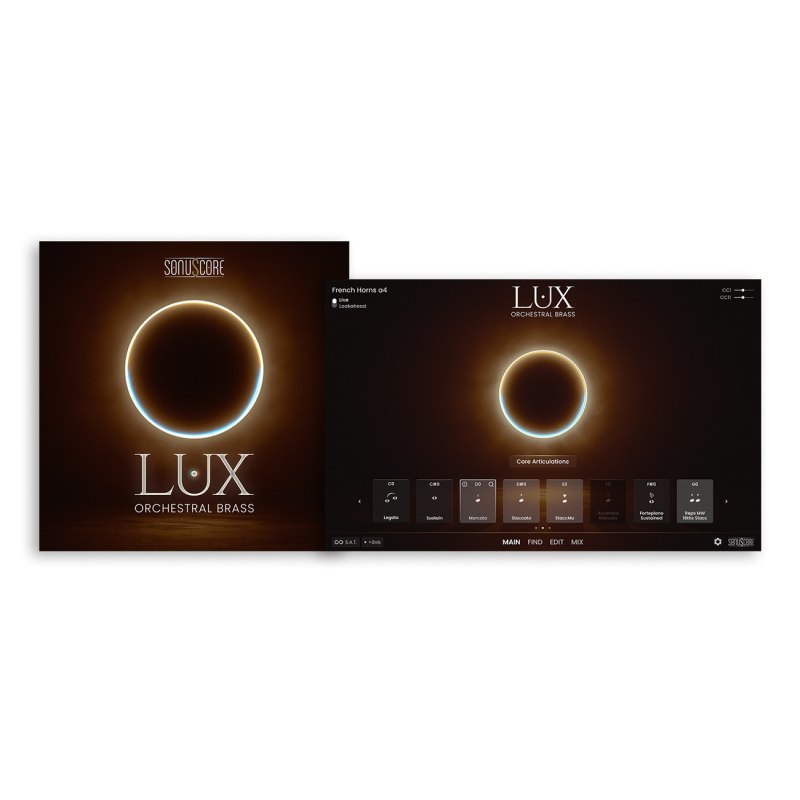
SonuScore LUX Orchestral Brass (Download)
ID: 214209
• SKU: 1133-435

Authorized Dealer
In Stock


$499.00
100 in stock
On Sale



$1,139.99
$1,099.99


SonuScore LUX Orchestral Brass (Download) Overview
$US 499.00
LUX Orchestral Brass True Dynamic Range. Pure Brass.
With LUX Orchestral Brass, we set out to keep the same spirit that made LUX Orchestral Strings popular with composers everywhere, while recognising that brass sections need something different.
LUX Orchestral Strings made composers feel like they were in the room with the musicians. LUX Orchestral Brass does this too, but focuses more on depth than on width. We took this approach because composers told us they wanted brass they would actually use.
LUX Orchestral Brass is not meant to be another "big Hollywood brass" library like many others. Instead, it is made to work perfectly with LUX Orchestral Strings and one of the few libraries that records the full dynamic range instead of creating it artificially.
- Full Orchestral Brass Section
- Key switch articulation sets for every musical context
- Up to Six Dynamic Layers
- Auto Divisi Instruments
- Six Mic Positions + Full Mix
- Seamless Articulation Transitioning
- Morphing articulations
- Adaptive articulations that switch automatically as you play
- Composer-Crafted ensembles with different voicing combinations
SKU: 133 –
Need Help? Contact Us Leave Feedback
Categories: EDU, Orchestra, Woodwinds & Brass
Tag: LUX Series
Punctuating Our Memories
Brass instruments have played a special role throughout history. Horns signalled important events, like the arrival of royalty or the beginning of a battle. Many celebrated classical pieces, from Wagner’s Ride of the Valkyries to Copland’s Fanfare for the Common Man, showcase unforgettable brass.
For decades, brass instruments have been central to some of the most memorable film scores. The 1960 score for the iconic movie Spartacus stands out for its punctuating brass. John Williams’ opening of Star Wars is impossible to forget, thanks to its bold brass, while John Barry created an evocative theme in Out of Africa that features sweeping brass. More recently, Hans Zimmer has used brass to add tension throughout modern classics like Gladiator and Inception.
Brass has a special role; our aim with LUX Orchestral Brass is to honour the heritage by giving composers an instrument to continue the tradition.
What Makes LUX Brass Special
Sonuscore asked working Hollywood composers what they actually reach for. The answer wasn’t a long list of special articulations. It was sustain, legato, different marcato styles, staccato, staccatissimo, fortepiano and repetitions, all recorded with depth, consistency and wide dynamic range. That’s where the recording time went. Instead of adding countless special techniques, we focused on making the articulations composers use every day as good as possible.
Up to six dynamic layers From pp to fff, each one recorded separately. All long articulations feature the full six layers, capturing how the character and timbre of real brass changes across the dynamic range. Push the Mod Wheel and you hear more than a change in volume, you hear the instrument itself change.
One room, not two libraries. Strings and Brass share the same scoring stage, each in its natural orchestral position, with matching bleed mics and the same acoustic signature. Working inside LUX means working in one real orchestral space, not combining two separate rooms in a mix.
Your brass changes character as you push the Mod Wheel and blends right away with LUX Strings, because both were recorded on the same stage. Every swell feels performed and your mix feels complete.
The Full American Layout
Solo Horn, Horns a2 and a4. Solo Trumpet and Trumpets a3. Solo Tenor Trombone and Tenor Trombones a3. Bass Trombone. Bass and Contrabass Tuba. Cimbasso. Auto-Divisi instruments with Polyphonic Legato for French Horns, Trumpets and Trombones. Plus, an Ensemble Instrument for playing the whole section at once. The layout composers expect from a classic Hollywood scoring session, not a partial set.
Comprehensive Bleed Microphones – Back By Demand
Bleed microphones were one of the most talked-about features in LUX Orchestral Strings, and composers were clear that we couldn’t leave them out of Brass. When something captures the true experience of a full orchestral scoring session this well, it earns its place across the range.
System Requirements
Mac
• OS: macOS 13 Ventura or later
• CPU: Apple Silicon Macs: macOS 13, 14 or 15 (latest update); Intel Macs (i5 or higher): macOS 13, 14 or 15 (latest update)
• RAM: 8 GB
• Disk space: 59 GB
Windows
• OS: Windows 10 or 11
• CPU: Windows 10 or 11 (latest Service Pack), Intel Core i5 or equivalent CPU
• RAM: 8 GB
• Disk space: 59 GB