


This item cannot be returned.
Sound Magic Morin Khuur (Download)
ID: 13480
• MPN: Morin Khuur
• SKU: 1162-67

Authorized Dealer

On Sale





Sound Magic Morin Khuur Overview
The Masterpieces of the Oral and Intangible Heritage of Humanity
The morin khuur (Mongolian: морин хуур, Chinese: 马头琴), also known as the horsehead fiddle , is a traditional Mongolian bowed stringed instrument. It is one of the most important musical instruments of the Mongol people, and is considered a symbol of the nation of Mongolia. The morin khuur is one of the Masterpieces of the Oral and Intangible Heritage of Humanity identified by UNESCO.
Sound Magic’s Morin Khuur is the most comprehensive Morin Khuur sample library on the market. It does not only include Morin Khuur, but also includes Bass Morin Khuur and High Morin Khuur. It does not only have solo instruments, but also has the different ensemble sets. Each technique also sampled with multi velocity layers and round robin samples to make sure its perfection.
Insturments in this sample library :
Morin Khuur: Solo, 10 players ensemble
Bass Morin Khuur: Solo, 6 players ensemble
High Morin Khuur (Experimental): Solo, 10 players ensemble
The sound of Morin Khuur is similar to viola in some degrees, it sounds deep and rough with a passion to present a vivid picture about life on the Mongolian steppe. Bass Morin Khuur is a new type of instrument originated in 1953 with the aim to serve as cello in a mongolian orchestra. High Morin Khuur is also a new type instrument with the aim to provide higher pitch in a mongolian orchestra similar to violin in symphony orchestra. But none of the prototypes of this instrument is as successful as Bass Morin Khuur and it remains very limited in popularity as this instrument is still in an experimental phase that has some defects in sounds.
A decca tree perspective to reproduce the rich texture and dynamic of the whole Morin Khuur string section. A stereo set to come closer than close perspective to emphasize some details. There is also a stereo set that is placed above the audience seats to capture the full reverb sound of the hall of National Centre for the Performing Arts.
Deep Sampled with Highest Quality, then applied modeling technology
This deeply sampled 217GB Library is the most detailed sampled Morin Khuur ever. And by using the latest hybrid modeling technology, it can also represent glissando, vibrato and tremolo more vividly than other sampled instruments. The playability from modeling technology enables it to change timbre real time during playing, and this gives the sound more varieties and expressive than sampled instruments.
Modelling can do the things that sampling technology can not
You can start legato or glissando anytime you want, on any technique it has, not limited to the patch that has sampled legato. Also, you can change timbre in real times as a modeled instrument. With modeling technology, you can get an instrument that sound keeps changing, not the fixed or dead as a sampled instrument. In audio demos, you can clearly hear how the instrument changes through time; give the sound unlimited possibilities and varieties.
Hybrid Vibrato and Tremolo
For perspective, this means starting with non-vibrato and then fading in vibrato sustain while changing depth and speed. Or, you can also change Tremolo speed in real time while optimize control or to leverage human behaviors in the vibrato for enhanced realism in the final version.
Finish all work in just one track with Performance Key Switch system
Which you can switch technique fluently and easily. Modeling technology also provides support for real-time interaction and change on sound. For example, you can smooth change from a plain sound to a full vibrato sound. That is difficult to achieve by sampling technology. And this adds more realistic to final sound.
Limitless Sound Shaping Possibilities
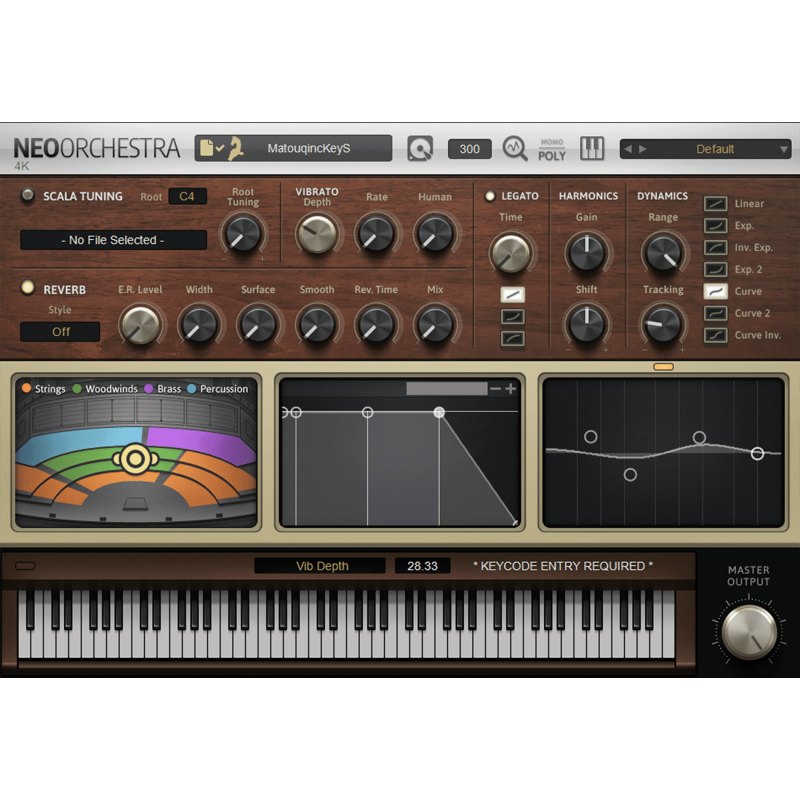
Morin Khuur offers far more sound-shaping options than a sampling instrument with five bands parametric EQ and more control over the harmonic partial sounds. This means you can quickly change timbre with a simple turn of a knob or tune every single note with the Scala tuning system.
System Requirements
Mac
• OS: macOS 10.6 or later
• CPU: CPU: 1.8 GHz Intel Core 2 Duo or equivalent
• RAM: 1 GB
• Disk space: 15 GB
• Formats: VST2, AU
• Architecture: 32-bit & 64-bit
Windows
• OS: Windows XP or 7
• CPU: CPU: 1.8 GHz Intel Core 2 Duo, AMD Athlon 64 Dual-Core 4000+ or equivalent
• RAM: 1 GB
• Disk space: 15 GB
• Formats: VST2
• Architecture: 32-bit & 64-bit